
How to Prepare When Preparing Isn't Enough
A Q&A with the authors of Compassion in Crisis.

Dear friends,
What does it mean to truly prepare for disaster? And does the act of preparing mean that you’ll actually feel prepared when a disaster hits? These are questions we’re all grappling with on some level these days — whether it’s conscious grappling or the kind of subterranean resistance to grappling that shows up as anxiety.
And isn’t it refreshing when people do their grappling out in the open — where the rest of us have the chance to learn from it?
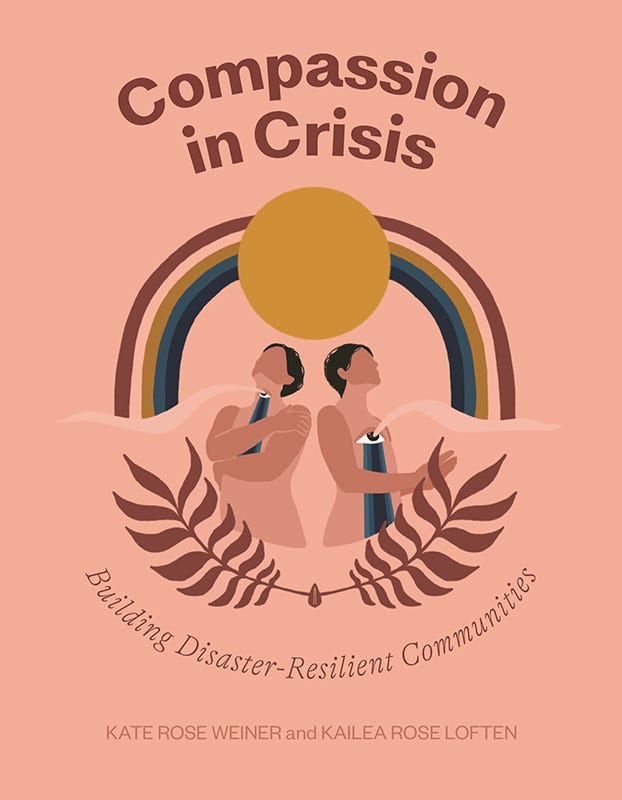
Kailea Loften and Kate Weiner, co-authors of the new book Compassion in Crisis: Building Disaster Resilient Communities, are an excellent example. In the book, they combine their own reflection and analysis, interviews with people from all over the climate movement, and a series of interactive exercises designed to walk their readers down a path toward individual and community preparedness — using a series of approaches that range from understanding herbal remedies to practicing mutual aid.
When the idea to write the book arose, both Loften and Weiner were living through fire seasons in separate states, California and Colorado. The two women had come into organizing through the youth climate justice movement, and later connected through the Spiritual Ecology Fellowship. Since 2017, they have been working together through their independent publishing house called Loam, now a project of the Weaving Earth Center for Relational Education. The wildfires they lived through, and the smoke that filled their communities, prompted them to dig deeper with members of their community about what it meant to prepare — together. As they write:
“When we looked to our neighbors, we saw again and again that it was everyday people who mobilized to support one another in the face of inadequate government response. Energized by the practices of mutual aid coursing through our communities, we began to dream about writing a book that could serve as an honest reckoning with the multifaceted—and shapeshifting—reality of disaster. We were curious what might shift for both us and our readers if we treated preparing for disaster as an act of reclaiming what we cherish, instead of an act of fear.”
I spoke with Loften and Weiner last month about the book, mutual aid, and the difference between disaster preparedness and disaster companionship.


You write: “When we first seeded Compassion in Crisis in 2018 the word ‘unprecedented’ still held some meaning.” How are you thinking about this moment, and the disorienting combination of denial and normalization of the climate crisis?
Kailea: I can think of an explicit example. While I was living in Petaluma [California] and going through several intense years of back-to-back wildfires, it often felt like my friends and family members in other places couldn’t grasp what we were going through. Photos can’t convey the sheer anxiety you feel when you’re trying to figure out an evacuation plan for you, your child, your husband, and your dogs. Or what it’s like to be trapped in your home during a heat wave when the air outside is filled with smoke.
In 2018, when we first began trying to convey some of what it was like to experience these things, I could tell that it would fall flat. Then, in 2020 my husband and I chose to go back to the Island of Maui, where I grew up, for a few months just to breathe some fresh air and get a little bit of reprieve. And while we were on the island, there was a small fire that started in a gulch right outside our door. My husband and I went into high gear. The fire was about 1,000-feet away from our home, and it was getting big, and we didn’t hear sirens coming. We went into our house and started packing our bags. My sister and her boyfriend who were living on the island at that moment in time, and were staying with us, went outside and just kind of stood there watching the fire. They hadn’t yet had the experience of knowing how quickly a fire could get out of control .It didn’t hit them as like, this is a moment.
That fire was thankfully put out, but while we were staying on the east side of the island, an area that is typically wet that time of year, I remember looking at the grass, and noticing that it was really dried out and brown, and there were these big winds coming through. They were perfect fire conditions. I told my friends and family members on island, and they thought I was being alarmist. Then, in 2023, the Maui fires happened, and they were devastating.
It’s hard to convey what it’s like to experience a climate disaster until you’ve been through it. And then, of course, once you have, you start to understand that it’s not something that will happen in the future — it’s here with us right now.
Kate: I live in the Northeast now, but I was in Colorado for a long time, and I have noticed that there’s such a different fluency and familiarity with wildfire response there. It is a threat in the Northeast, but the story is that we’re on higher ground, and so I’ve been reflecting a lot since moving home on the impact of that framing here. We’ve had really bad wildfire smoke here in the last few years, and either people don’t recognize it as smoke or they don’t take it as a serious health consideration, because there’s a lack of education and understanding.
This book includes a wide selection of interviews with organizers, artists, healers, and others involved in mutual aid. Why did you want to bring so many other voices into the book?
Kate: I think disaster response has to be community-led; that is foundational to how Kailea and I approach this project. This would be a very different kind of book if it was just us and our thoughts and feelings — it would be incredibly limited. Because we’ve learned so much from others in terms of how to show up, it felt important that it be a true chorus of voices and perspectives. Every place is different, and every disaster is different. And it felt critical to include a lot of different people who could speak to the spectrum of experiences that we’re confronted with in this moment of polycrisis.
Kailea: We have been calling this book a love letter to organizers, and we both just hold the utmost respect for people who are doing frontline organizing work — which is often undervalued, underfunded, or not understood. And so we wanted to uplift some of these individuals who we look to as examples of how to do the work. But as someone who has attended a fair number of organizing trainings and been in a lot of spaces with other organizers, what an absolute gift it is to be trained, especially in person. When you bring organizers together, there’s so much exchange that happens organically. But we’re hitting a moment where the ability to attend these kinds of trainings and spaces in person is feeling less and less possible. Our hope is that this book can help facilitate some of the need for community knowledge exchange, when traveling might be less possible for people.
I especially appreciated your conversation with California state burn boss jiordi rosales and transdisciplinary artist and shepherd brontë velez. What have you learned from their practice of “disaster companionship”? Companionship seems like an important element for preventing burnout.
Kate: I love how jiordi offers a distinction between disaster preparedness and disaster companionship and the value of both. Disaster preparedness can look like creating water-wise landscaping around your home or clearing brush. Disaster companionship is a frame that doesn’t replace preparedness but expands it by reflecting on the emotions and the perspectives that arise in relation to those actions. Because the polycrisis is an ongoing and compounding state, the reality is that every crisis is overlapping with another, and it requires a very different orientation to what’s arising. When I first heard that term disaster companionship, I felt a sense of relief. As someone who’s often called alarmist, it felt like a term I could sink into, a way to acknowledge the gravity of these times.
Kailea: So much of what I think brontë and jiordi are getting at is about choosing to face, prepare for, and work through and with [disaster] instead of running away from it. And I appreciate the invitation to not run, which is so counter to what our inclination is. There’s this idea that we can go and somehow find higher ground or a safe haven, which is not reality based. We are living on an interconnected planet, so all we can do is be here and show up for what is happening.
How have you seen mutual aid disrupt old ideas about “charity”?
Kailea: I had the opportunity to interview Brittany Koteles, the co-founder of an organization called Land Justice Futures, which does organizing with Catholic nuns to move land back to people who had land taken from them historically or whose labor was exploited in order to build the U.S. economy. I asked her about the distinction between charity and solidarity, and I really loved what she said, which is that charity assumes neutrality, and if you’re doing your organizing work through a lens of charity, there’s this idea that you have no responsibility to understand the bigger systems that have created income disparity and wealth gaps. And solidarity turns that idea on its head and asks that we continue to place those most vulnerable at the center of our organizing, while taking the time to understand why our systems create oppression. And even how we might be benefiting from this oppression. Without doing this we can’t bring about systemic change.
Kate: When we spoke with Nicole Huguenin, [a Maui-based community organizer who was involved in mutual aid efforts after the fires], she spoke about how many kinds of wealth come into play when you’re supporting a community after a disaster. There’s relational wealth, and financial wealth, and sometimes you have to prioritize relational wealth over financial wealth. She shared with us how in one case, there was an organization that wanted to donate resources, but it did not want to take accountability for the ways it had created the conditions for that particular crisis — that its actions had been part of the problem. I really appreciated being invited to reflect on the different kinds of wealth we’re holding.
I have known some people who look to disaster preparedness, in part, as a way to cope with or dispel their anxiety. And I hear from others that even just considering disaster preparedness can make them anxious. What are your thoughts on that relationship?
Kate: It’s really important to be clear about what preparedness is and isn’t. I’ve been thinking a lot about this recently, because I’m navigating a particularly acute grief, and I have been reflecting on how there was no other grief in my life that prepared me for this. Previous experience with grief doesn’t dilute the pain. If you expect preparedness to ease the pain of loss — whether it’s loss of a person or a place — that isn’t what preparedness can do. It doesn’t make it any less challenging to live through difficult moments. What has made preparedness less of an anxious proposal for me is reframing it as a practice in presence. I mean, I hope preparedness might strengthen certain muscles, and it might save lives. And I also know it’s not a guarantee.
Kailea: Anxiety, fear, overwhelm, uncertainty are big emotions that can place us in a state of freeze, flight, or maybe just straight up avoidance, which are all very normal responses to have if you are to deeply consider what is at stake right now — and all of the scenarios that you might actually have to live through, experience, or witness in some way. And I think it’s important not to try to minimize or outrun those emotions.
Thank you. Is there anything else you’d like to add?
Kailea: You named your newsletter after the window of opportunity [to prevent a more catastrophic climate crisis], and when I reflect on the last decade or so of moving through climate change movements, it does seem like that window that we’ve been offered is closing. But I want to say that there’s another window available to finding a deeper relationship with each other in order to get through this moment. And that window is always open.
Climate news you might have missed
Santa Maria: An alternative climate gathering gets up and running
After a divisive lack of consensus at COP28, last fall’s United Nations Climate Change Conference, a group of 50 nations gathered in Santa Maria, Colombia last week to map out a plan to phase out fossil fuels. Called the “coalition of the doers,” the gathering was like a smaller COP without the U.S. and other petrostates stonewalling even the most basic steps forward — which must have made the whole thing feel much less combative. And while the participating nations didn’t adopt the fossil fuel treaty many advocates have been pushing for, they did make some progress. Colombia published a draft roadmap and set up a panel of scientists to advise other countries. Then, France released a national roadmap to phase out fossil fuels. The participating nations have scheduled a follow-up meeting in Tuvalu in 2027.
Ticking clock-blocking
Climate superfund bills — which require oil and gas producers to pay for damages caused by the climate disasters — and lawsuits against the industry are being seen as two of the more effective ways to hold the industry accountable as the list of said disasters continues to grow. According to the advocacy group Climate Integrity, “eleven states and dozens of city, county, and tribal governments collectively representing more than 1 in 4 Americans, are currently taking major oil and gas companies to court.”
That’s why the industry has lobbied lawmakers in the House and Senate who have proposed the Stop Climate Shakedowns Act of 2026. According to The Guardian, the pair of bills would “dismiss pending climate accountability lawsuits, void all climate superfund laws and block similar future efforts.” The bills are based on similar efforts to shield the gun industry from liability a decade ago. But this kind of help doesn’t come cheap. Senator Ted Cruz (R-Texas) and Representative Harriet Hageman (R-Wyoming), the Republican lawmakers behind the Act, have together received more than $9.5 million from the oil and gas industry so far.
“It’s weird that we need a survival plan”
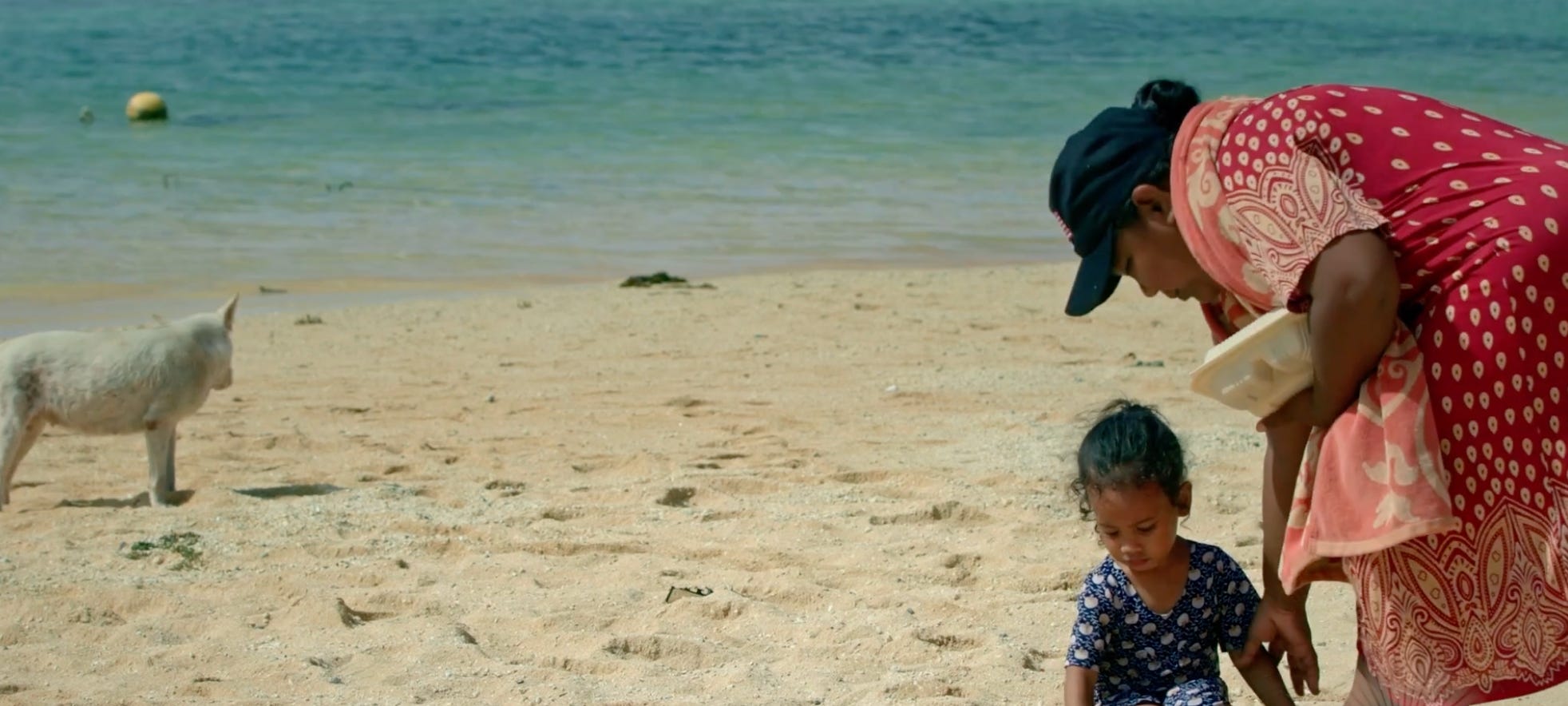
The Marshall Islands — an archipelago in the South Pacific made up of over 30 inhabited islands — has often been treated like a sacrificial zone. The U.S. government tested nuclear weapons at Bikini Atoll throughout the middle of the last century and now sea level rise has begun to unleash pollution from the radioactive “tomb” it created on Runit Island. I highly recommend this video about the climate activists in the Marshall Islands working on an urgent adaptation plan for the island small nation.
On the brighter side
The recent “ESA Amendments Act” would have stripped the Endangered Species Act down and sold it for parts. The good news, for now, is that the bill was pulled from consideration just moments before it was scheduled for a vote after several Republican lawmakers, mostly in tourism-dependent states, showed signs of opposing it.
The first wild condor egg seen in Northern California in 130 years has likely failed, but scientists and Indigenous tribes are still optimistic about what its mere existence foretells about the threatened birds ability to reproduce in the wild.
Cougar kittens were captured on film for the first time in Minnesota.
Electric vehicles now have much more range. As the New York Times reports, “EVs under $40,000 can now go as far as the most expensive models of a decade ago.”
I’m taking this one with a big grain of salt, but it seems worth sharing: In the new study, utilizing AI modeling, researchers simulated solar and wind rollout in 13,000 “virtual worlds” and found that it may still possible to limit global warming to 2°C given the current pace of transition to renewable energy.
The drought that has a firm grasp on the Colorado River is negatively impacting most fish — except several species of endangered fish that could stand to benefit from the release of water from a reservoir upstream of Lake Powell.
The South Korean solar industry is working to use the Iran crisis to spur a renewables revolution.
New research suggests that healthy forests are integral to flood management.
If you haven’t seen Elizabeth Ayana Pressley’s subway take, it’s worth watching. As she says: “We have the climate solutions we need, we just need to ****ing implement them.”
Spain’s wild horses are helping communities prevent wildfires.
A few spring photos just because:


Take care out there,
Twilight
What a great interview - a lot of fresh ways of thinking, feeling, and moving in here. I'm thinking a lot about how these different books are in conversation--Katharine Wilkinson's, Anya Kamentz's upcoming book etc. etc.